Hilde Lotz-Bauer
Scanno's Women

Feminist writer Eleonora de Nardis Giansante, who organises
Scanno’s Ju Buk festival, contributes a powerful tribute to the women of Scanno and how they were portrayed by Hilde Lotz-Bauer
In Scanno, women do not simply walk: they mark the passing of time with their footsteps.
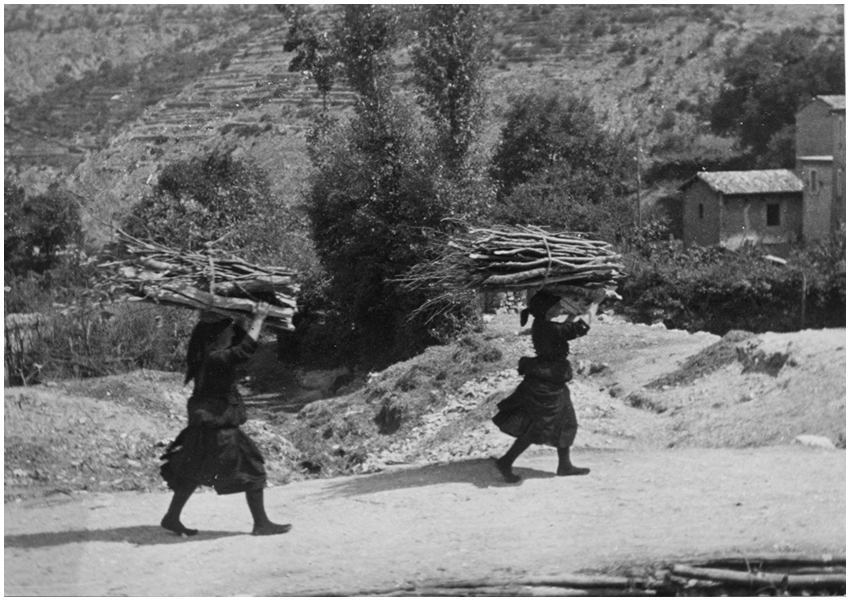
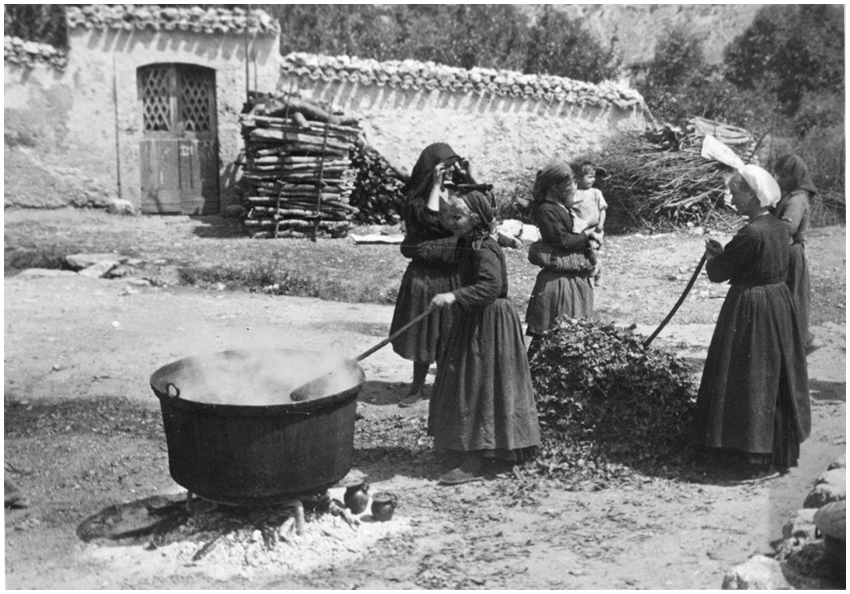
You see them emerge from the shadows of the stone streets, where the light arrives like a long-awaited revelation, and they carry centuries upon their shoulders. Their clothes are not mere costumes: they are living archives, hand-sewn folds of memory, velvets that speak of long winters, aprons that have listened to the breath of the houses, the silence of waiting. The headdress, austere yet solemn, frames faces carved by the cold and by dignity; and from beneath, like an ancient secret, descend braids – thick, tight, powerful – evoking coils of snakes, goddesses forgotten at the bottom of the lake, primordial mothers, presences predating even the names of the gods.
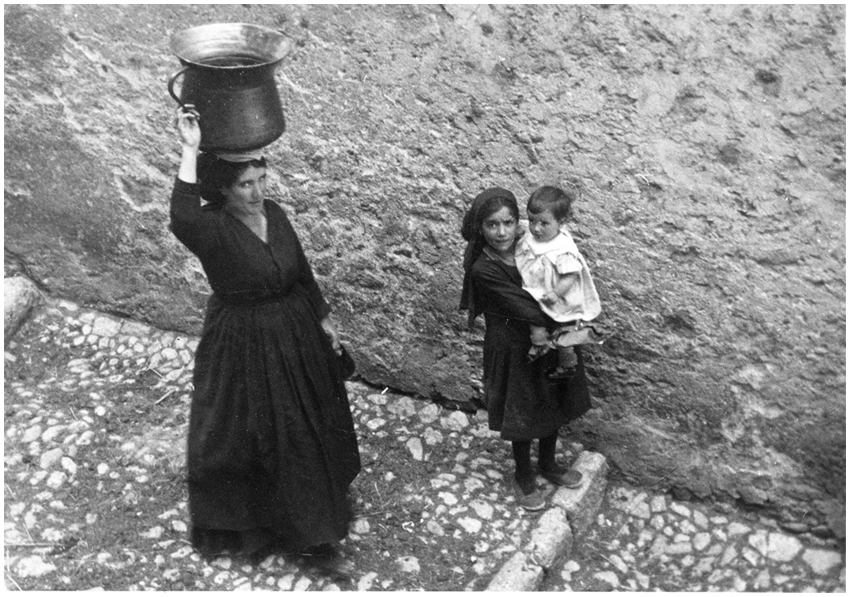
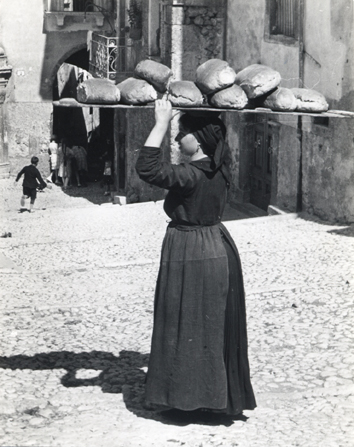 There is something archaic and untouched about these figures. They do not ask to be looked at: they impose themselves. In their daily gestures – washing, sewing, kneading, climbing up and down alleys as impassable as dilemmas – one senses the gravity of a greater, almost cosmic task. For during the long months of the year, when the men followed the flocks on their transhumance, it was they who held the world together. Not just the home, but the small-scale economy, relationships, the very survival of the village. Guardians and creators, root and breath.
Yet there is no ostentation; they speak little, almost not at all. But their silences are not empty: they are full like the earth before sowing: one can hear the defiance, the pride of those who have never asked permission to exist. A form of emancipation that needed no modern words, for it was born of necessity, of resistance, of continuity. Self-determination carved out of toil.
Scanno, perched amongst the mountains, seems to want to protect this female universe as a living relic. The stones of the houses, the worn steps, the half-open doors: everything speaks of them, of their presence that has never receded. Even in isolation, even in the harshness of a landscape that separates and constricts, they have built a community that breathes to the rhythm of women.
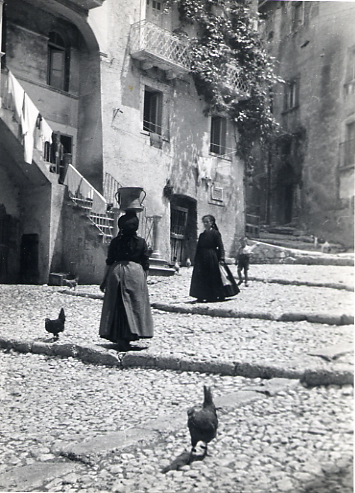
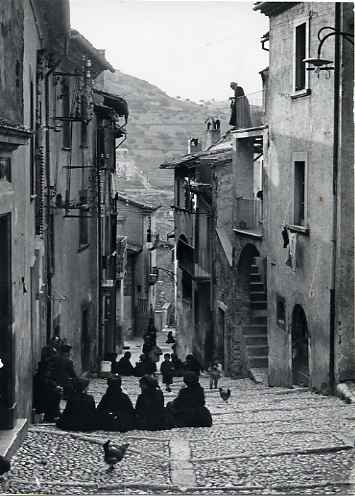
In Hilde Lotz Bauer’s images – rigorous, respectful, never intrusive – this truth emerges with an almost painful clarity. There is no exoticism, no spectacle: only an ethical, patient gaze that knows how to wait. The photographer does not steal the soul; she lets it emerge. And so those figures do not become objects, but presences. Every wrinkle, every fold in the fabric, every lowered or direct gaze tells a story that asks not for interpretation, but for listening.
Looking at them is like standing before an altar without religion, where the sacred is made of lived experience. Women who have never needed to proclaim themselves strong, because they have always been so. Women who have inhabited the margins, transforming them into the centre. Women who, even today, carry on their shoulders not the weight, but the continuity of the world.
And in that silence – so full, so ancient – one can still hear the deep heartbeat of mothers.
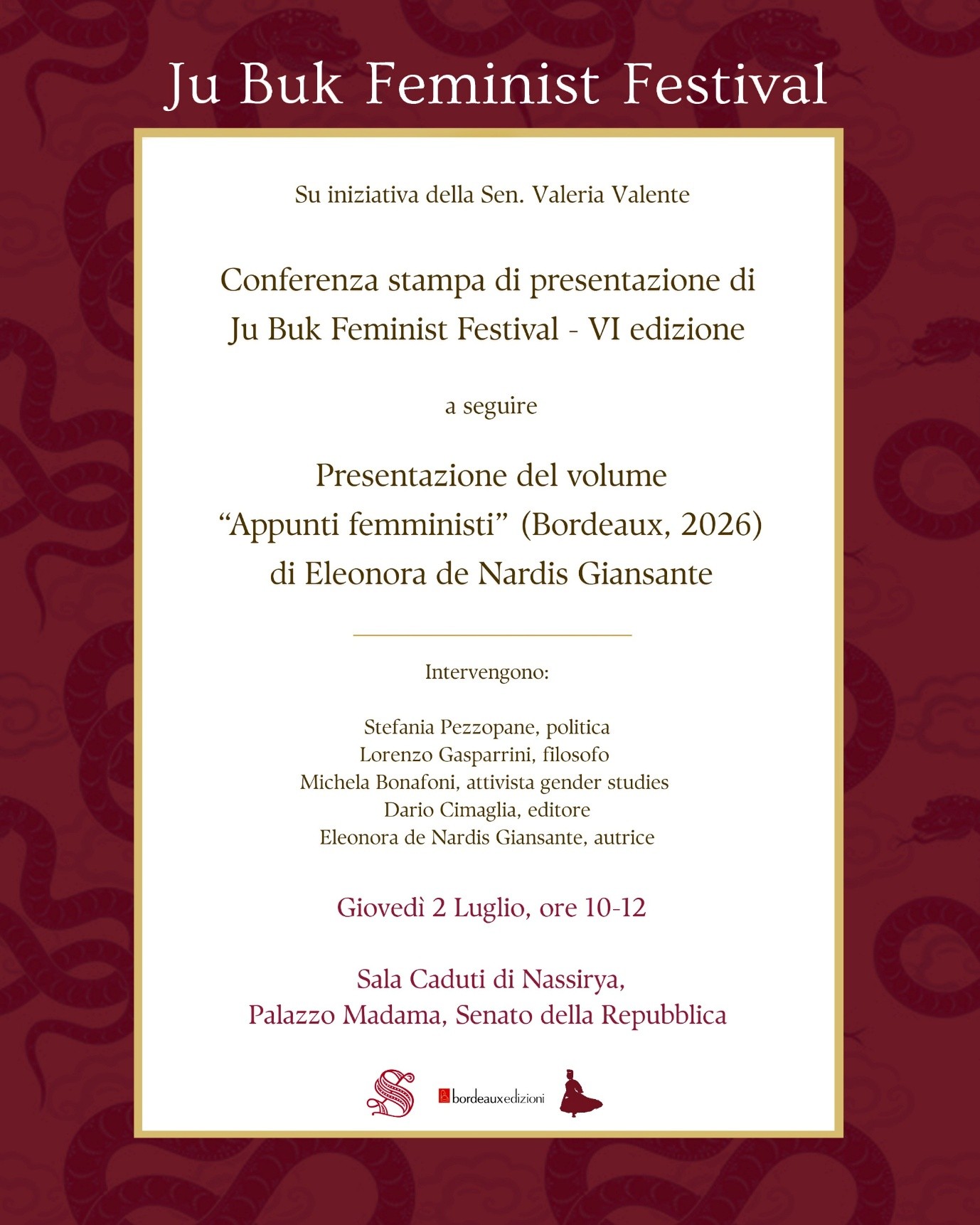
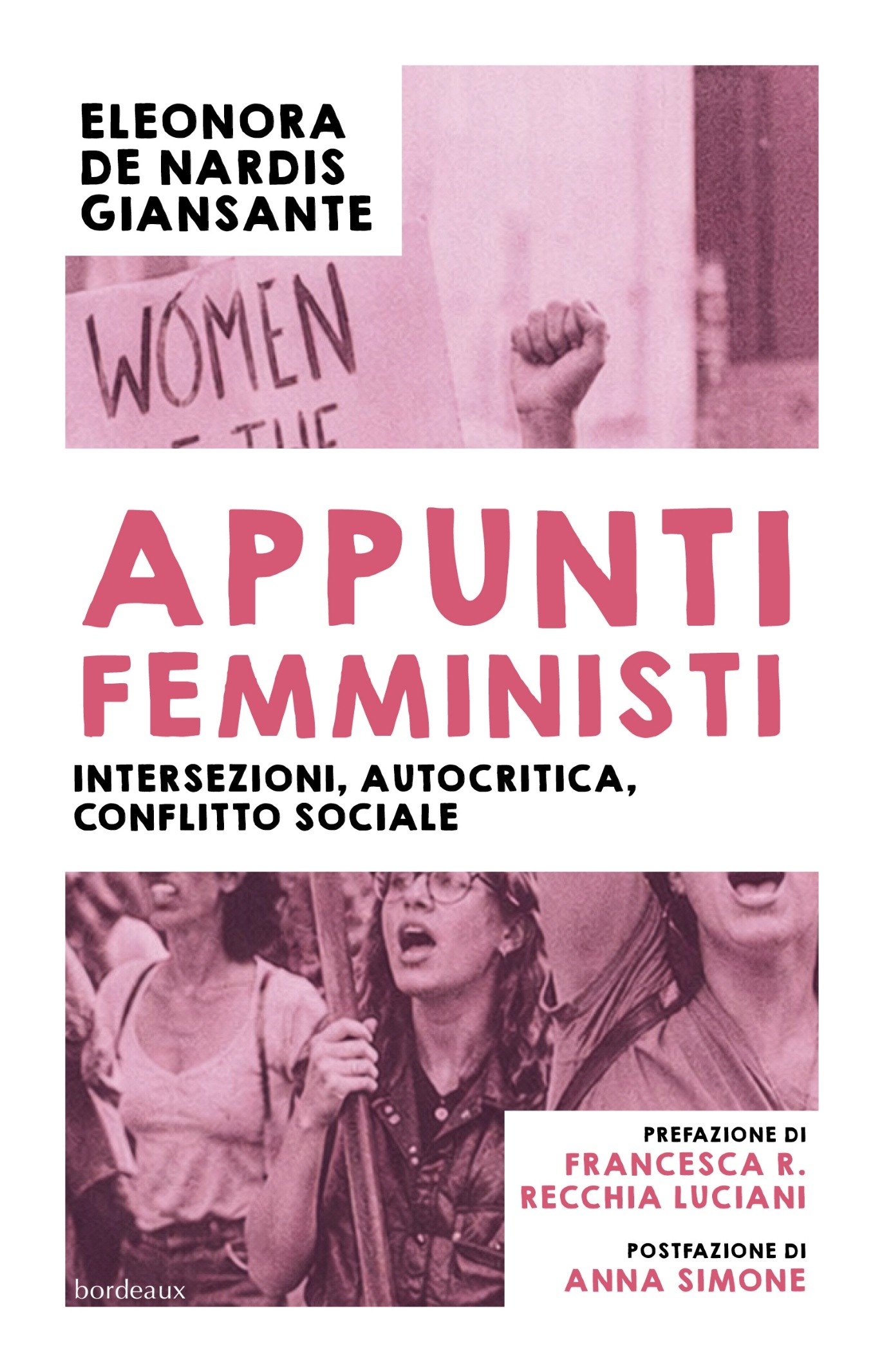
Eleonora's new book Appunti Feministi (Feminist Notes) is being presented at Rome’s Senate building, Palazzo Madama on 2 July 2026 in a press conference for the 6th Ju Buk Feminist Festival.